
Our Blogs
Your New BEAU: Don’t Judge a Book…
The bond between books and film is complex. Of course you have your book-to-movie transformations—always somewhat hit or miss, depending on the people behind the film. The Oscars was replete with such films this year, really boosting book sales. You have you truly successful film adaptations, and your utter flops. A good adaptation can act as a great advertisement for the book—whether you see the movie and pick up the book at B&N on the way home from the theater or (if you’re like me) you see an intriguing movie trailer and endeavor to finish the book before the film comes out in theaters.
Now the book/film relationship has really been taken to the nest level: book trailers. With so many people with their eyes glued to the internet, surfing at light-speed from one website to the next gathering bites of info, book trailers seem like a very creative and logical step: short, audio/visual and available on YouTube. One need not read back covers or inside flaps or find descriptions on Amazon, just sit back and watch a preview of the book.
Do book trailers really work as a marketing tool for books? Hard to say. The concept is not yet a regularly used marketing tool; not every new book out there has a trailer (probably for the best). But some of them are quite creative. If you like book trailers, you can get a steady stream of them at Shelf Awareness. They post a link to a new trailer every day.
Just some food for thought. I mostly made this post because the trailers are my favorite part of going to the movies. Can’t say book trailers will ever be my favorite part of reading a book. But, like millions of people out there, I’m a sucker for the fleeting amusement of YouTube A/V bites and there are at least 40 video clips now linked to this blog post. Let the clip-watching marathon begin!
Also, dancing books!
BEAU-cause: Libraries’ Marketing Technique is Unexpected and Genius
As a book lover I can’t help but adore book paraphernalia. Give me an outdated encyclopedia from the 1960s, a spiral wooden staircase adjacent to a massive bookshelf or the florescent lighting in a 6-story college library and I find myself pleased and right at home. The beauty in these destinations resides in their coexistence with isolation and variety. Public libraries have mastered this chaotic concept of mixing the adventure of a novel or excitement in a published study with the quiet cliché of shushing librarians and slow moving check out lines and they are finally receiving recognition from the business world.
While forgotten by some and embraced by others, public libraries were a key focus in New York City last week at The O’Reilly Tools of Change for Publishing Conference. Library Journal’s Barbara Genco argues in her keynote, Public Library Power Patrons Are Your Best Customer: Lessons from Patron Profiles, that publishers need libraries more than libraries need publishers. Genco explains that book readers fill up public libraries and have a substantial effect on the market. These patrons who visit their local library once a week are all—yes, all, as in 100%—book buyers. Any myth that those who check out books are interested in solely saving money are false, as half of these go on to purchase other books by authors introduced to them at the library. With buying power in the book business obviously holding a lot of weight, it is odd that this inherently free form of author/brand advertising has yet to receive credit or exploitation.
The book world has had endless conversations regarding the eBook throughout our current technological revolution and it has a place in this library conversation as well. Book publishers have been wary of incorporating the rights to their eBooks in public libraries, though there is this huge opportunity to contribute to this market of book buyers. Genco’s study reveals that patrons read eBooks as well as those old fashion bound paper contraptions that one finds in a library and these vivacious readers want more eBooks at their disposal. I’d argue that eBooks and public libraries hold a similar function: to make literature more accessible. This occurs by making books free for temporary use or convenient and quick to own, but when a reader finds that striking author or simply good novel, they are more likely to purchase the physical book for their own collection. So, if all publishers allowed their eBooks into the public realm, would there be a detrimental loss in the eBook market? Could eBooks become the convenient and free tool used to find literature worth physically buying? Possibly.
Nevertheless public libraries have influence in the book business, as they function a subtle and very effective salesman. Who knew?
J.A.J.
Your New BEAU: A Glass of Milk
Technology progresses and a new generation is born growing up with little more than inkling of the modes of life preceding the convenience of torrenting and the iPhone. The internet has made the dream of free content (whether legal or illegal) a reality and once you give a mouse a cookie, an entire world of products is expected to come for free, too. It’s only natural. In a capitalist society, the center of our concerns is money; how to get more of it and how to spend less of it. And now, a precedent for access to free content has been set. The music and film industries have fought against “piracy” on the internet, the illegal downloading of albums and dvd rips. Why should anyone ever buy a cd? or a $20 dvd when, with a little patience and the right program, one can download the file and watch it on their laptop?
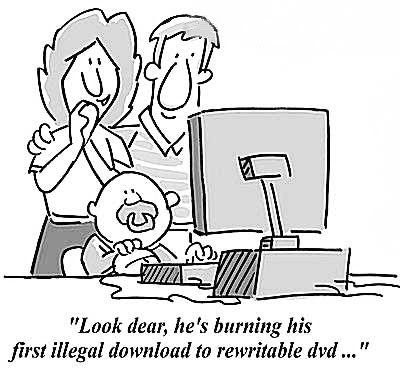
With the book industry, the approach has been quite different as of late. Amazon offers a number of free e-books. Websites like Project Gutenberg have created a store of online books that are public domain. And now, authors are posting shorter works on Facebook and Twitter. In this week alone, GalleyCat has posted articles that R.L. Stine posted a mini horror story on Twitter and Alex Epstein wrote a collection of stories in Hebrew (partially translated here) posted as an album of photos on Facebook.
Maybe all of this voluntary free content/product will break the foundation of capitalism itself and America will experience a complete economic turnover? You never know.
GalleyCat is clearly into free content. They posted links to download 7 free e-books that inspired the late David Foster Wallace. He would have turned 50 today. If you haven’t read any of DFW’s quirky and extremely intelligent writing, you should!
I, too, love free things. But I still will probably never stop loving this (i.e. real you-can-hold-them-in-your-hands books– on awesome shelving!).
Your New Beau.
BEAU-cause: It is Charles Dickens 200th Birthday—and YOU should care
BEAU-cause: It is Charles Dickens 200th Birthday—and YOU should care
This might be a played out tune, but do you recall a high school English teacher trying to ignite a passion for 19th century prose through the endearing characters and eloquently layered storytelling of Charles Dickens’ Great Expectations, Oliver Twist or David Copperfield? Well, I do and I am going to hopefully pick up right where that faithful cardigan wearing, current No Child Left Behind Act hating teacher left off years ago and challenge you to care, yet again, about the master of the English novel. I feel it is bittersweet to accompany the woes of the poor orphan boy Oliver and the gentle Pip with the angst of the American teenager. Sweet because these tales of hardship and transformation do parallel our own post childhood, pre adult years and they should educate us without the need to experiments with hair dye, thrash metal and college keg parties, but so bitter because they don’t… for the most part.
If you were/are one of the minority of people or the average English major who fell for Dickens at the first sight of Miss Havisham’s stained yellow wedding dress, then you of course need no convincing. Fresh out of college with my English Lit degree in hand, I moved from the hippie beach town of Santa Cruz, California to the business capital of the world, New York City and what did I read on the subway my first few weeks in this crowed and beautiful metropolis? Charles Dickens’ Great Expectations, of course…Why? Because I had great expectations and I craved some guidance from the man who popularized the phrase. As I read it became clear that Pip and I were hung up on completely different dreams, people and insecurities, which for a brief moment left me feeling a bit more lost than before. Then a strange conclusion occurred, although I did not connect with the protagonist in superficial or specific way, once finished with the novel I felt hopeful and a bit stronger than before. Even if I felt I couldn’t have less in common with Pip Pirrip, his little story had the right balance of failure, perseverance and luck to prove that I could endure my own adventure.
I suppose this is why I care, but why should you? Well we’ll have to go back to the angst filled teenager. It is safe to say that this very boy or girl is—right this very second—on Facebook, Twitter or some other social networking site and this year, Dickens is getting the praise of, more or less, originating the social networking platform. You probably didn’t see that coming did you?
Jonathan H Grossman’s Charles Dickens’s Networks: Public Transport and the Novel, out this spring 2012, is an analytical case that makes stellar argument. Grossman suggests, “Dickens grasped the promise that the public transport revolution held in networking people together.” Dickens loved mixing different social classes in his novels, but Grossman explores this merge further and focuses on the technological development in regards to society. “Prior to the 19th century,” Grossman continues “a typical sense of community was based on proximity, so people felt most connected to their local town, but after the shift to a network of public transport, they also started to feel more connected to those people they could get to the most quickly through the network.” As far as social networking goes, we are currently in a technological revolution, just as Dickens was in transportation and industrial revolution when he wrote these influential novels. Completed in 1848, Dombey and Son was one of the first pieces of literature to highlight the important shift to railway time, which brought towns into a synchronized and standardized timeframe. This new standardized time and rapid travel along with the culture clashes of country counties, port towns and bustling cities, brought various souls together that would have never had the opportunity to connect. Now we have the opportunity to connect online with websites like couchsurfer.com or OKcupid.com and reconnect on Facebook. As Meg Sullivan, Senior Media Rep of UCLA explains in her article ‘The Social Network’: Charles Dickens wrote the script,“[Dickens] looked at the technological revolution unfolding around him and recognized the possibility for new kinds of social networks, and the insight catapulted him to the pinnacle of his field and changed popular culture forever.” Dickens noticed and highlighted these changes like no other novelist in his time, innovating the way a culture digested this phenomenon. Basically, if Dickens were alive today, Mark Zuckerberg would have had a fierce competitor.
So as this February marks Charles Dickens’s 200th birthday (February 7th to be exact), you should care. If not for his connection to your ever-transitioning life or, as head of UCSC’s Dickens Project John O. Jordan raves, for Dickens’s incredible, unforgettable characters the splendid dialogue, then for his insight on technology and human nature that is still, more than ever, relevant.
J. A. J.
Your New BEAU: Modern Book Banning…
The spread of ideas. This was the goal achieved by the invention of the printing press, and now this spread can reach even farther across the globe with the internet. We write and publish and distribute in order to share an idea we want others to hear about. The right to free speech in America allows an open market for idea-sharing, regardless of the intention behind the idea-spreader, be it the best of intentions or the worst—documenting a history to be learned from or indoctrinating ideological extremes. We have the right to share an idea with whoever will listen, with the understanding that whether one agrees with the idea or not is the listener’s prerogative.
Just a few of the books banned
Then why have critical Mexican American Studies (MAS) texts been essentially banned from schools in Tuscon, Arizona? The school officials say they haven’t been banned. The books are still available in the school library. But all MAS classes have been cancelled and all of the related textbooks were confiscated to a storage locker-room.
The right to free speech should logically prohibit all censorship. If I can say whatever I want, I can write whatever I want, and I can do both publicly. But the impulse to ban books seems to come from a slightly different motive: not to keep anyone from writing, but to keep others from reading. Perhaps you think these concepts are the same, but I see some minute difference, though not a charming one. It is somewhere along the lines of Rick Santorum’s “I have no problem with homosexuality. I have a problem with homosexual acts,” even consensually and within the privacy of one’s own home. The analogy is not exact, but where I draw the connection is this: it’s okay for all books (all sexual orientations) to exist, but it is not okay for those books to have any contact with readers (for homosexuals to engage in homosexual relations).

In the case of Tuscon, AZ, the readers are high school students in MAS classes (and now all high school students as the books have been confiscated). What books should be in school curriculums has throughout history been a difficult issue to assess. Education shapes young people into the adults they will become. What we teach them will play a part in molding their minds, and forming their opinions. So, knowing the impressionability of young readers, what values do we want to teach them through books? What values should we teach them? A question made difficult, as it is answered in drastically different ways based on what social institutions one belongs to.
The Tuscon Unified School District (TUSD) believes the MAS program was teaching Mexican American students to become rebels in revealing the wrongs done to Mexican Americans in our history. The AZ Superintendent declared it illegal to teach what he sees as “racially divisive classes.” The MAS classes seemed to attract most Mexican American students, which lead school officials to believe that the classes were indoctrinating students rather than merely teaching students about documented historical events. Free speech becomes a sensitive issue in schools where texts can be used to instruct and just as easily to indoctrinate. But the MAS program in Tuscon was not some military insurgent brainwashing facility, and in banning those books—whether officials admit it or not—they are wiping out a critical part of Arizona’s own history. The group with the harmful agenda here is the TUSD.
The simple truth: books are ideas. And ideas can be frightening things. The best idea can mean risking certain securities you are used to. The worst idea can reveal the easiest path to the greatest pitfall. But all ideas can and should be spread. All warrant individual evaluation. Ideas—books—make us think, and the right ones can make us better people. And just as any idea has the right to exist, it is each person’s prerogative to personally disagree with an idea. But who gets to decide what ideas others can or cannot have access to? What ideas other are “allowed” to consider for themselves? Should anyone have that power?
My feeling: books are meant to be read. I want to hear your idea, regardless of whether or not I agree with you.
Free the books, Arizona.
Your new Beau.
Beaustie Boy: Everybody Hates Amazon
Remember when everyone hated Amazon? You don’t have to think back that far because it’s happening right now. All of the seemingly out-of-the blue backlash against Amazon has been flooding the publishing news circuit this week. Barnes and Noble’s recent decision to not sell Amazon books in their stores (they will still sell online content) was a catalyzing move causing many other bigwig and independent booksellers to follow suit. The logic behind the decision is that Amazon has limited the availability of content for readers and also has steered towards exclusivity with publisher and authors, esentially making a VERY unfair market for selling books and attempting to completely dominate other publishers and outlets. What everyone is moaning and groaning about is that they do not feel that in the (near?) future publishers should not be forced to comply with Amazon in distributing their content. The vice-president of Indigo Books even stated that Amazon does not have the long term interest of the reading public nor the publishing industry in mind.
Just a few years ago Amazon revolutionized the way the public reads when they launched their Kindle tablet, increasing the sales and popularity of e-books. (Side note – one thing I learned interning today is that Kindle was NOT the first e-Reader. The first official e-Reader was distributed by Sony…yet when it was launched it fell flat on his face. Seriously, who screwed that one up?) Point being, Amazon’s digital movement was embraced by most readers and engaged a lot of publishing professionals when it was released, yet now that they are moving towards publishing paper and hard backs everyone is up in arms.
Is this really fair? I agree with most when they say that Amazon opening physical store locations throughout the country would most likely fall flat on its face, but would it actually monopolize the book selling industry? Certainly one can’t argue that Amazon DOES limit content to their audiences and encourages complete exclusivity with some of their clients. But Apple does the same thing…try playing your iTunes music on any device other than an iPod. (yeah, it doesn’t work). This is just the nature of business, and in my opinion due to the increase of digital media and online content the business of publishing has become a bit of a melee. It’s fair to want to protect your assets and your business by rejecting collaborative efforts with a potential competitor, but is it fair to be this vitriolic in the press? Amazon had a great idea with the Kindle and e-books and it’s natural to want to expand on that idea and include audiences that might not have jumped on the tablet bandwagon. The objective of business is to continue to generate revenue and a wider audience, and Amazon is doing just that.
It’s important, especially in today’s world, to be a conscientious consumer. If people are willing to research and engage in political discussion when electing a President or Senator, they should be just as willing to come up with their own opinion of how and from where they are purchasing. I think a lot of the book sellers, especially the smaller independent ones, played a little bit of follow the leader when B&N made their public decision without really thinking in-depth about the choice.
Time will tell how all of these decisions will effect the market of book selling and from where people are likely to get their books…but in the mean time keep posted and and do a little digging around the Internet before you shake your finger at Amazon.
P.S. The one laughing all the way to the bank in this episode is not necessarily Amazon – while all of this mudslinging was going on Houghton Mifflin Harcourt signed to be the first distributor of content outside of Amazon.com…a potentially very profitable move. Will it spark a different game of follow the leader?
Your New BEAU: the future of Barnes & Noble
Barnes and Noble has been all over the news! Well, at least news in the publishing world. It would seem that B&N and Amazon.com are butting heads in a number of arenas. What does it mean for their future?
Firstly, the Kindle v. Nook battle. Well, the Kindle v. Nook v. iPad battle, I should say.The different devices have some fundamental distinctions. The iPad seems to come out the overall winner, as Apple products tend to do, with the ability to e-read (can you verb that?) and so so much more. But just looking at the [much cheaper than the iPad] basic e-readers, the Nook beat out the Kindle by Consumer Reports ratings. And yet, it would seem that the Kindle is less expensive, has a larger library with cheaper ebooks and has more apps and such available. The Nook? Has more RAM, more memory, a larger screen and is more lightweight. The choice is yours. It’s still unclear which is doing better sales-wise.

Secondly, B&N’s patent-infringement case with Microsoft. Word on the street is, Microsoft demands that B&N pay exorbitant licensing fees for the Microsoft Android technology used in the Nook. Bloomberg News thinks B&N will win out, but Microsoft says Amazon pays the same demanded fees for the Android tech in their Kindle Fire. Eek.
Thirdly, and most dramatically (yes, the B&N entanglements with Amazon can get still worse…), B&N made a “declaration of war” stating that they will not stock Amazon published books in their stores (though they will sell them online) in protest of Amazon’s “exclusivity” with publishers, “undermining the industry as a whole,” claiming that Amazon has “prevented millions of customers from having access to content.” Sadly for B&N, Houghton Mifflin Harcourt has not such qualms with Amazon and has agreed to distribute its books in print. So, while B&N sticks their principles, Amazon still wins out in this battle and HMH snags the deal.
Barnes and Noble still stands as the world’s largest bookstore, but for how long? With Borders gone, B&N should be reaping the benefits, but that doesn’t seem to be the case. What would the world look like without B&N and with Amazon as reigning champion? I hope it does not come to this. I respect the world’s right to ebooks, but the idea that print will cease to exist is incomprehensible. Maybe print will go “underground” and become the medium of rebels and revolutionaries, oppressed by the “conventionals” with their heads in the iCloud. That’s actually a neat idea for some future-dystopia story a la Clockwork Orange or 1984, but I’d rather it not come to that.
Stay strong, B&N. Don’t leave us.
Your New Beau.
Your New BEAU: There is no third.
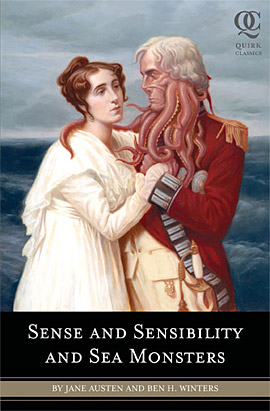
What’s with all these books rewriting the classics? And why do they do so well? Pride and Prejudice and Zombies? It was already a NYTimes bestseller only eight days after its publication in April 2009…I can see how it could be fun to write, perhaps as an exercise for a writer seeking a little fuel for the imagination. Sense and Sensibility and Sea Monsters followed soon after in the same year, but to somewhat less success. I will be honest and reveal that no, I have not read these fantastical mash-ups. But one must wonder if our world is so devoid of originality as to compel folks to rely on reinventions of someone else’s story to make a buck. Sondheim certainly takes issue with it, though the situation was slightly different.

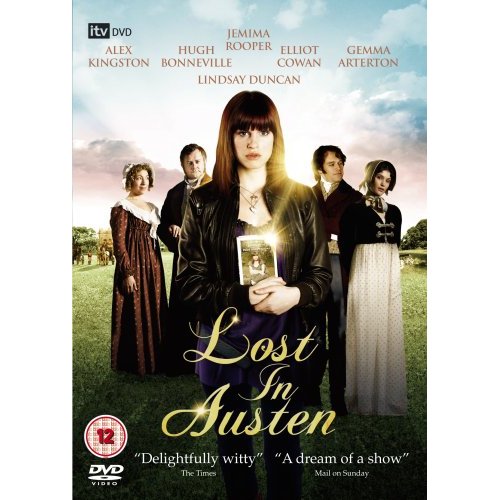
I only wonder this today as Shelf Awareness alerts me to the existence of some “Fresh Takes” on Louisa Mae Alcott’s classic Little Women. Much like the bizarre mini-series Lost in Austen, Emily March falls into the story of Little Women and becomes the “Middle March” (ha, George Eliot joke!) in Little Women and Me. She endeavors to find out why Laurie ends up with Amy instead of Jo (sorry, spoiler…) and decides she wants him for herself instead! ….Well, could be fun, I suppose…

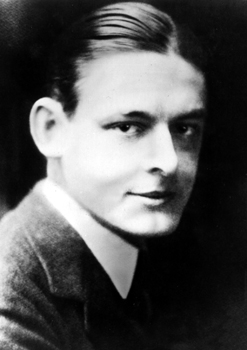
I began research for some kind of “why” to explain how this kind of reimagining happens. Instead all I found were more and more examples, including sequels, prequels, new points of view (My procrastinating self went on Google and all I got were these lousy search results). So, we could go with the “Dante and Shakespeare divide the world between them– there is no third” excuse (thank you, T.S. Eliot). Perhaps it is just some cyclic cultural phenomenon; we are stuck in a mire of retellings until a new classic emerges to then fall subject to its own various degradations.
Can some insight be gleaned from specific examples? Let me count the ways:
Pride and Prejudice and Zombies, Seth Grahame-Smith
Uses 85% of the original text and intersperses Zombie scenes into the narrative. Given “A” ratings by some, called a defamation and “100% terrible” by others. A gimmicky attempt to mesh a popular modern fad (zombies) with a popular classic novel (P&P). Double the popularity=double the money?
The Wind Done Gone, Alice Randall
A parody of Gone with the Wind, in which the original is retold from the perspective of a mixed-race plantation owner’s daughter, who is Scarlett O’Hara’s half-sister. The novel almost wasn’t published, due to accusations of copyright infringement. Social commentary?
Mary Riley, Valerie Martin
Dr Jekyll and Mr. Hyde, retold from the perspective of the doctor’s maid, Mary Reilly, who falls in love with the dichotomous doctor. Julia Roberts starred in the movie. I read this in high school. No comment.
Mrs. DeWinter, Susan Hill; Pemberley, Emma Tennant
Sequels to Rebecca and Pride & Prejudice, respectively. Fan-fiction?
So, what “whys” have we? Money. Commentary. Self-indulgence. Well, the second reason seems noble and amusing enough. As for the rest…I do not really like to generalize. Some of these books, I’m sure, have their own merits. I can’t say I’ve never read one of the sort. Truth be told, I’m reading one right now (not telling). But whatever the reason for them, Kristen Bell always has a fresh perspective.
Though inconclusive, still as ever,
Your new Beau.
Human Moments
One of the many reasons I enjoy reading is that books can be prisms through which I view the world. Great works of fiction can help me understand and reflect upon any given period of time and circumstance. A Passage to India by E.M. Forster is an insight into relations between the colonizer and the colonized in British India. One Hundred Years of Solitude is an intimate portrayal of Colombian family and culture. So many of the classic novels that we are both required and love to read have found a timeless place on bookshelves all over the world because their themes are universal and, well, timeless.
As I set out to write my second blog, I referred back to what I wrote last week on technological innovation and how it has transformed us as a society, in some ways detrimentally. Snowballing off of that, I find it striking how many contemporary works of American fiction have started incorporating tech themes into their narratives. A Visit from the Goon Squad had an entire chapter told via a PowerPoint presentation. Await Your Reply by Dan Chaon is about how easily identities are swiped over the Internet. Lisbeth Salander embezzles millions by computer hacking in the Millennium Trilogy.
Perhaps without consciously taking into account my opinion on the insidiousness of technology, one of the best books I read last year was Don DeLillo’s The Angel Esmeralda. The book, a collection of nine short stories touching upon a multitude of themes, is entirely removed from the tech trends – so much so that reading on an eReader almost detracted from the ambiance of the book. While it has mostly been excluded from Pulitzer prediction lists and best of short-lists, I hope that it is not left unnoticed. Each story can be revisited over again, and even the earliest written story is relatable. The themes of loneliness, isolation, sexuality, intimacy, anger, and youth make for an engaging read. While no story is alike, a mysterious atmosphere permeates throughout the collection.
My favorite story is “Human Moments in World War III,” a futuristic depiction of two young men in orbit aimlessly (and mindlessly) firing at “targets” on Earth during a cataclysmic period of war. They have a collection of “human moments” with them in their vessel – photographs, trophies, clothing, etc. to remind them of their past, and probably of their humanity. Without any sense of time or place the characters rely on their languor to estimate the day of the week. When they believe to hear a human voice crackle through their transmission, the doubt and confusion they feel is eerie to read. The thought of human culture being so far removed compared with the isolating experiences of the two boys is so powerful, I thought about the story for hours after despite its mere 15 or odd pages in length.
The book stands out not only in the oeuvre of DeLillo’s work but in the array of books released last year because of the human moments – and I’m not necessarily talking about the one story. If I am right, and fiction indeed can help us reflect upon and relate to each other, one need not look further than this book. I promise you, the intimacy is in every paragraph and punctuation mark. It reminded me how important, frightening, moving, and exhilarating relationships can be at times. Not to beat a dead horse, but it really is remarkable how different relationships were when we relied not so heavily on technologically supported interaction but on human interaction.
Basically, if I’m ever stuck with a stranger in a spaceship sometime in the future launching missiles into the atmosphere, one of my “human moments” would definitely be this book.
– BB
BEAUstie Boy – Gary Shapiro, You Changed My Life
It’s me, the other intern, and the only boy Beaufort has seen for many many internship moons. It only took a few hours for the past interns, yet seven weeks to the day later here I am also tossing my hat into the blogosphere. I can blame it on all the amazing project opportunities that have gotten thrown my way but in reality we all know that I have continually failed to come up with a compelling topic and a crafty moniker (which we definitely now know that I have still failed to do…Beaustie Boy? Really?) Just when I thought, “Aha, I’m ready to write my blog about Pulitzer Book predictions and book lists!” Word Press blacked out before I could say “The Marriage Plot.”
One of the daily tasks that I have been performing for the past month and change is to track marketing updates for most of our authors. One name that floods into my inbox morning after morning is Gary Shapiro, CEO of CEA (hehe). For weeks now I have been perusing and filing away news articles Gary has written about SOPA and PIPA, which at first simply had my Spanish speaking mind thinking of soups and pipes. After about 50 more articles over the course of a month I figured I should know what I was reading about and, evidently, what everyone else was talking about.
The Stop Online Piracy Act and Protect Intellectual Property Act have elicited some strong responses from Senators and Congressmen to bloggers and your everyday Google searcher. On Wednesday, major websites like Wikipedia and Word Press shut their digital doors. Google even prompted visitors with a petition to send to Congress. The day of darkness forced everyone to imagine a world without Internet (or a trip down memory lane to the pre-Apple days). While most are against intellectual property theft and multimedia piracy, both acts just do not provide enough protection against false accusations with potential for abuse of the legislation to become out of control. In one of his most recent articles for Fox, Gary even declares victory for the American people, whose collective voice was too resounding to ignore. Essentially, we all told Congress to put that in their PIPA and smoke it.
Now that most of us are breathing a collective sigh of relief, we undoubtedly have spent some since this bill hit the floor thinking about how the Internet has become a crutch for contemporary society. Increase of social networking has also increased our desire for anonymity and arguably decreased our interpersonal social networking. I’m not saying we should regress to the days of carrier pigeons – but remember when we didn’t text? Remember I invited you to my birthday over the phone instead of a Facebook event? Now thanks to the Internet, I no longer have to trek down to Tompkins Square Park to check out my books from the library I can just get them online and have them delivered to my Kindle in seconds! Cool, but sad. The Internet has proven how malleable we are by consistently changing the way we communicate with each other and by the toll it is has taken on many businesses, not just publishing.
For now, the Internet still remains as powerful as the public chooses to make it. We have avoided possibly catastrophic consequences by preventing SOPA and PIPA. Instead of wiping our brows and muttering thanks to the Congress gods before moving on to the next best thing, we should start remembering how we survived without the Internet in ye olde days. I know I still go to the library, still buy physical books, and still call you to invite you to my birthday party.
George may have been a few decades off, but maybe it’s a matter of time until Big Brother really is watching you.
Just a thought, albeit a creepy one.
Your New BEAU: Thank you Johannes Gutenberg
Hello from your new Beaufort intern! That’s me, Lauren. A little about me: I just graduated from Colby College (it’s in Maine!) and, of course, I love books. I told my aunt I got an internship in book publishing and she said something to the tune of, “There won’t be a career to be had there soon.” I’m sorry, but the printing-press was possibly the most world-changing innovation this side of the birth of Christ (i.e. the Common Era) and I don’t think a little thing like the inter-webs is going to wipe out the great past-time of print.
Perhaps I underestimate the power of the internet (I do). E-books and kindles and Nooks and such are enjoying great success in the modern age. And if that’s your preference, I stand in no one’s way. I only mean to say that I don’t believe e-books mean the end of print. One might point to such events as the closing of Borders or the downsizing of many print newspapers as evidence of the demise of print. Yes, print has taken a hit, but it is far from gone. Besides, I always wonder about how the ever-growing ether of the internet has given rise to this mass transfer of our whole lives into an intangible sphere, and what happens when the internet just explodes? Where do our whole internet lives go? This is why I love paper. Remember when everyone stocked up on food and supplies in fear of Y2K? That was funny.
Anywho! Print/e-book debate aside, one of my main interests is promoting literacy (thus, my interest in publishing and shaping new books to put on the shelves!). I want everyone to love reading as much as I do! So, here’s an event I just learned about that seems totally awesome! World Book Night! Sounds cool, right? I know. The idea is that on April 23, 2012, across the nation, 50,000 volunteers will be handing out a total of 1 million free books to anyone and everyone that will take them. The volunteers are being called “book givers” and they will be handing out one of 30 popular titles (listed on the website), like print-superheroes mysteriously emerging from the shadows in the night to revive the secret pleasure of falling into a good book. So cool.
Until next time,
Your New Beau.
Beau-nafide Bird’s Eye-View: The Common Hours
“If one advances confidently in the direction of his dreams, and endeavors to live the life which he has imagined, he will meet with success unexpected in common hours. ” –Henry David Thoreau
When something comes to an end, one immediately reflects on the beginning. My Beau-nafide Bird’s-Eye-View concludes today, as does my internship with this collaborative, progressive, and supportive company. I would like to share with you the success I have found here, most usually in the “common hours,” and all the sweeter for that.
Inspiration: Jennifer Pharr Davis and her husband, Brew. Through Jen’s book Becoming Odyssa, and through the soon-to-be released diary of her record-breaking trek, 46 Days, I was able to learn from Jen’s determination to beat both the female and male thru-hike records on the Appalachian Trail. This resonated with me as a woman, one who is sometimes hesitant to take risks because of the risk of failure. She truly inspired me, and will inspire you, too. She’ll help you not only to go after your dream, but also to take each step with confidence. But what touched me most was hearing about Brew. He was her “first mate,” her partner on the trail who carried her supplies and took care of her every mile of the way. This was a growing experience in love. The further south these two traveled, the more they inspired all who knew them: go after your love in life and go there with all of your heart.
Determination: Barbara Gordon’s re-released I’m Dancing as Fast as I Can with new cover and preface. In today’s world, anxiety, depression, wearing oneself thin–they are all experiences which would seem to have obvious, cycle-of-life-type recovery steps. Barbara was hoping for just that when instead, her doctor wrote her a prescription for disaster. The reason the aforementioned stressors have sensible remedies today is due in large part to Barbara’s experience; that is, her experience helped discover the truth about Valium. Its numerous side effects have come to light since her struggle, and it has also prompted people to question the philosophy behind taking a little pill that “promises to solve it all.” Her determination to scream about this wrong-doing at the top of her lungs made me reflect back on how lucky and blessed my life is. If she could recover and come back from being, no joke, at rock bottom, then there is absolutely no reason why any of us should give up.
Confidence: Debra Beck and My Feet Aren’t Ugly. Think back to when you were a child, an emerging teen now called a “tween,” and fill in this blank: My ________ is so ugly! The point is, we all can fill in that blank; we all had something that, for no rhyme or reason, we hated about ourselves. These type of thoughts lead to low-self esteem and low self-confidence, always hoping that no one would notice an imperfection and make fun because of it. Debra’s life mission is to empower teens to love themselves, and it all stemmed from her childhood hatred of her feet. Her young adult self-help book opens the doors of communication. It also struck a chord with me, having once been a teacher who taught because I wanted to help children accept their weaknesses, work toward their strengths, and support others who were doing the same. Though my hang-up wasn’t worrying about “ugly” feet, I’d always had anxiety about not living my dream life and feeling that I wouldn’t be able to rest until my life was the way I envisioned it. Until I saw this book, that is. After working extensively with Debra, I realized something: each “common” hour is an “uncommon” one—each is special. (Especially if you’re surrounded by all the people here at Beaufort!)
Admiration: Susan Biali and the Sabbatical Sisters, Live a Life You Love and Reboot Your Life. These five ladies practice what they preach, so-to-speak, by rebooting their lives with a sabbatical in order to ultimately live a life they love. I admire people who take these types of risks: who follow their hearts, who find success in that. And who wanted to come to Beaufort to share their stories. How can one not admire another being for taking a chance to better themselves, ever? After reading their books and dabbling in email conversations with these ladies, it became evident that they’ve gone after what they want, and they continue to dream up more future successes.
Precision: William B. Bradshaw and The Big Ten of Grammar. For gurus of our English language, when you hold this book and soak in the “there-their-they’re” and “lie vs. lay” chapters word-for-word, it’s like Christmas come early on every page! (Lucky for us, it is the holidays now!) Nevertheless, the Big Ten earned a permanent home on my desk, and whenever a friend or coworker would ask for my “expert editing,” I’d hand them Bradshaw’s publication. Being precise, writing accurately and taking the time to reference the experts really goes a long way. Dreams tend to be precise, but the journey to achieving them usually is not. The precision of this book translates to being precise in life in order to keep us on track, ever focused on the dreams we hold so close.
Adventure: Margery Gray and Sheldon Harnick and The Outdoor Museum. This new title, full of images of New York that I had never seen before, completely captured all of us here at Beaufort. From the angles and beauty of the shots by Margery to the poetic rhymes that Sheldon created for each photo, there was a regular feast to be had for the imagination. In seeing these, I saw the city in a whole new way, a way that I had to get out there and see for myself. Last night, a month after my sense of adventure was ignited by this book, my coworker and I turned the corner and nearly tumbled over one of the thousands of possible pictures to be included in the book: “The Grilled Chicken” painted plywood mascot. This seemed bittersweet in that it was one of the photos that we all had never seen in our lives but always wondered about. And then on my last night in the city, we ran right into it. With so many more pictures to find and take myself, Beaufort awakened my sense of adventure in this gorgeous city.
Camaraderie: The Beaufort Team. This past summer, I embarked on pursuing my dreams of a career in publishing by applying anywhere that there was an opening, and Beaufort was the one who called. From being here, I’ve learned exactly how this well-oiled machine works. These titles are precisely picked for its readers, and no detail goes unturned. In pursuing my dream, my unexpected success came in the form of teamwork, working towards everyone’s strengths, and staying on task to get things done. When you are an intern, you are “a person who works as an apprentice or trainee in an occupation or profession to gain practical experience” (so says dictionary.com), but it also means you are in charge of the running around, of tying up loose ends, of making copies, and sending books out, among other things. Here, it was not only practical experience: it was also a humbling, unexpected one. It’s because of Beaufort, because of their support and their guidance, that I was able to find my first job in publishing.
From the outside looking in, if I could give you one insight into this company, I’d say this: passion. Each book is a milestone, a piece of a dream for both the author and Beaufort, and a piece of success. Here, every person who works with Beaufort will meet success unexpectedly in the “common hours,” and none will ever be the same again.
Jennifer Pharr Davis: A Woman Among Men
Jennifer Pharr Davis did it again! Announced just yesterday, she has been nominated by National Geographic as one of the Top Ten Adventurers, 2012. Jen’s prolific achievement on the Appalachian Trail–she is now the world-record holder of the fastest thru-hike ever on the AT, man or woman–has earned her this impressive recognition. Her story is one of persistence and unmatched inner calm in the face of so many doubting Thomases. Most interestingly, Jen occupies a spot most commonly held by men. Yes, even in the world of adventuring, or perhaps even more so, it is men who usually take the day. Sweating up peaks, sustaining bruises, and eating massive amounts of food is not very lady-like.
However, there is Jen: against all odds, against all stereotypes, she remains a powerful woman in a male-dominated world. She’s proven through her grueling feat that stamina and strength are not only for men, but for any who would just reach out and grab them. Jen’s record-breaking hike is a dream dreamed differently; the attainment of what she desired was not informed or shaped or altered by the people (men) who had gone before her. She dreamed without qualifications.
Jen herself puts it best when she says in the National Geographic interview that she “just want[s] women to know that they have the same options as men, whether that’s a thru-hike, a day hike, or a record, or going out for the weekend. . . . I think as it [thru-hiking] continues to evolve, women are going to feel more connected to it now, because they know they have the ability to go out and do something amazing on the trail.”
All of us at Beaufort Books would agree with that. We congratulate Jennifer Pharr Davis on her recognition and hope that her example stands as a reminder to dreamers everywhere that it isn’t what’s happened before that matters, it’s what you decide to do now.
To see the official National Geographic page for JPD, click here:
http://adventure.nationalgeographic.com/adventure/adventurers-of-the-year/2012/jennifer-pharr-davis/
To Still a Spinning World: Barbara Gordon’s Gift
Barbara Gordon’s I’m Dancing as Fast as I Can has been coming to mind a lot lately in this season of impending holidays, impending deadlines. Living in this fast-paced world, a world where material success is the ultimate measure of happiness and where the number of expectations that we’re able to juggle simultaneously is a sign of our strength, it’s easy to get overwhelmed. More importantly, it’s easy to forget that we’re human. It’s easy to forget that what we’re all in need of is time, that is, space for unmediated growth. Instead, we run and we run and we run, never once questioning what it is we’re chasing and why the race is so important in the first place.
What’s valuable about Dancing, among many other things, is that author Gordon has given herself the chance to slow down and write honestly about this unending web most of us unconsciously allow ourselves to get caught up in. What is this manic motion? What is this constant need to be better, faster, shinier? Why is there never an “enough”? In reflecting on her own struggles with these questions, Gordon gives us all a chance to breathe.
What’s more, Gordon is brave. She confronts something insidious, her very life-orientation, her very way of relating to the world. She dissects and deconstructs everything she’d ever known previously. Gordon’s example invites us all to stop blindly assuming we’re always where we should be, heedlessly consuming the things society tells us we ought, and subconsciously presuming that our life is filling in the way that’s right for each of us. She gives us the inspiration to step back from the dance that is our lives for even just one precious moment and reflect on what it is about dancing that we love most. She encourages us to dance for that, and nothing else.
Praise for I’m Dancing as Fast as I Can:
“Spellbinding seems too mild a word.” –Detroit Free Press
“Gordon’s story rings with authenticity.” –Washington Post
“I can hardly remember the last time I stayed up half the night because I couldn’t stop reading. But that’s what happened with I’m Dancing as Fast as I Can.” –Chicago Tribune
I’m Dancing as Fast as I Can, written by Barbara Gordon. Re-released this month by Moyer Bell, a division of Beaufort Books. Available now in bookstores across the nation.
Where are All the Women Writers? A Reflection
The scene is this: A bookshelf, sagging. Rows upon rows of many-colored spines. And each spine’s title recalls specific, special memories…standing on a too-hot beach, confusion and fury all around (The Stranger)…seeing your kid-brother in everything you do (The Catcher in the Rye)…fire-crackering the town clock in an effort to stop yourself from growing up (Farewell Summer). These memories are visceral and overwhelming and all-important.
However, there’s one thing that most people don’t notice when they take inventory of their books: the vast majority of their collection is no doubt comprised of male writers. Writers who have taught us and moved us and shaped us, but males nonetheless. Where are all the women? It is almost eerie to think that so much of our imaginations, both collective and personal, have been formed in large part by only one half of our species. While I can list scores of writers that have stayed with me, I can count on my hand those that have been written by women: Cather, Oates, Erdrich, (Zadie) Smith. The incredible majority of books that have meant something to me have had male authors (Salinger, Greene, Capote, Wallace, Hardy, Percy, Malamud, Vonnegut, Kesey, Toole, Frazier, Chateaubriand, Bradbury,William Carlos Williams) and I never thought twice about it until this weekend, when the disparity on my shelf jolted me out of my dreamy process of looking lovingly at books read long-ago.
More importantly, think of all the books that we want to read, that we feel foolish if we haven’t read. They’re The Grapes of Wrath and The Sun Also Rises and Anna Karenina and The Adventures of Huckleberry Finn and the 1984s of the world. This is our canon, this is our standard, and there are very, very few women who are a part of it.
Perhaps none of this is all that shocking. Men have had so much more time on women, as their voices have never been contested. And the fact that I can name any women writers, all of whom are powerhouses in their own right, is significant and wonderful. However, I do think it is time to peel back what often is an invisible film, time to really look at all of those stories and feelings and voices that we take for granted and which form our subconscious subconsciously. There are whole worlds of description underrepresented on our bookshelves (and this applies to the impoverished as much to the female.) What are we not hearing/seeing/thinking/feeling? During this Banned Book Week, a week for protecting and promoting that which is precious and endangered, it seems relevant to mention that there is a completely different type of preciousness that is just as worth seeking out and safeguarding: the voice of a woman.
List of My Top 10 Favorite Books by Women: Which Have You Read?
**please note: this list is obviously self-compiled, but this fact arose out of necessity: there are no formal lists that I could find! Truly shocking, truly a reminder of that which we’re not hearing. **
1. The Awakening by Kate Chopin
2. A Widow’s Story by Joyce Carol Oates
3. The Plague of Doves by Louise Erdrich
4. On Beauty by Zadie Smith
5. Bitter in the Mouth by Monique Truong
6. The Joy Luck Club by Amy Tan
7. The Petty Details of So-and-So’s Life by Camilla Gibb
8. Changing My Mind: Occasional Essays by Zadie Smith
9. O! Pioneers by Willa Cather
10. A Northern Light by Jennifer Donnelly
And for a more structural look at why women writers are underrepresented, and general observations on being a woman writer in the U.S., check out this great article by the ever-articulate Elaine Showalter: http://www.guardian.co.uk/books/2009/may/09/female-novelists-usa
Beau-na Fide Bird’s-Eye View
Think back to your first real, first serious book that you read in school. You know, the one where there may have been a curse word, or real inequality, or historic acts of cruelty. What about the first one where there was a real relationship, a first kiss or romantic moment, or even one where it wasn’t in a “perfect setting” and described the trials and tribulations the main characters had to overcome to survive. Now, close your eyes, and imagine that book and your life having never read it.
Enter disgruntled adults in favor of censorship. In opposition of taking away readers’ First Amendment rights, Banned Book Week was created in 1982, celebrating those titles and our freedom to choose what we read.
Since the written word became the published story, classics have been consumed by readers internationally, studied and appreciated a million times daily. “On July 21, 1998, the Radcliffe Publishing Course compiled and released its own list of the century’s top 100 novels, at the request of the Modern Library editorial board,” http://www.modernlibrary.com/top-100/radcliffes-rival-100-best-novels-list/. Now, what if I were to tell you that 50% of the best novels of all times are also banned books? Below are those from Radcliffe’s 100 list.
1. The Great Gatsby, by F. Scott Fitzgerald
2. The Catcher in the Rye, by J.D. Salinger
3. The Grapes of Wrath, by John Steinbeck
4. To Kill a Mockingbird, by Harper Lee
5. The Color Purple, by Alice Walker
6. Ulysses, by James Joyce
7. Beloved, by Toni Morrison
8. The Lord of the Flies, by William Golding
9. 1984, by George Orwell
11. Lolita, by Vladmir Nabokov
12. Of Mice and Men, by John Steinbeck
15. Catch-22, by Joseph Heller
16. Brave New World, by Aldous Huxley
17. Animal Farm, by George Orwell
18. The Sun Also Rises, by Ernest Hemingway
19. As I Lay Dying, by William Faulkner
20. A Farewell to Arms, by Ernest Hemingway
23. Their Eyes Were Watching God, by Zora Neale Hurston
24. Invisible Man, by Ralph Ellison
25. Song of Solomon, by Toni Morrison
26. Gone with the Wind, by Margaret Mitchell
27. Native Son, by Richard Wright
28. One Flew Over the Cuckoo’s Nest, by Ken Kesey
29. Slaughterhouse-Five, by Kurt Vonnegut
30. For Whom the Bell Tolls, by Ernest Hemingway
33. The Call of the Wild, by Jack London
36. Go Tell it on the Mountain, by James Baldwin
38. All the King’s Men, by Robert Penn Warren
40. The Lord of the Rings, by J.R.R. Tolkien
45. The Jungle, by Upton Sinclair
48. Lady Chatterley’s Lover, by D.H. Lawrence
49. A Clockwork Orange, by Anthony Burgess
50. The Awakening, by Kate Chopin
53. In Cold Blood, by Truman Capote
55. The Satanic Verses, by Salman Rushdie
57. Sophie’s Choice, by William Styron
64. Sons and Lovers, by D.H. Lawrence
66. Cat’s Cradle, by Kurt Vonnegut
67. A Separate Peace, by John Knowles
73. Naked Lunch, by William S. Burroughs
74. Brideshead Revisited, by Evelyn Waugh
75. Women in Love, by D.H. Lawrence
80. The Naked and the Dead, by Norman Mailer
84. Tropic of Cancer, by Henry Miller
88. An American Tragedy, by Theodore Dreiser
97. Rabbit, Run, by John Updike
Additionally, there is Animal Farm by George Orwell, which addresses both historical and political downfalls of the past, which shows readers how the Stalin regime dominated and what SHOULD have been done or seen, or what we are to look out for now in political turmoil. The Giver by Lois Lowry, describes a utopian society, but at what cost? The protagonist must choose right from wrong, all while coming of age, and what’s unrealistic about that? My Brother Sam Is Dead by James Lincoln Collier and Christopher Collier, is set during the American Revolution where a boy grows up during the war and has to choose his morals versus his family’s ideals; completely relevant to every generation.
Lois Duncan, Shel Silverstein, Maya Angelou, Margaret Atwood, Ernest Hemingway, Roald Dahl, Toni Morrison, Mark Twain, and even J.K. Rowling and Maurice Sendak. All some of world’s greatest and strongest minds, all questioned for writing about life in their own way.
In the last twenty years, according to the ALA, it was in the mid-’90s when the banned book bandwagon really gained momentum, challenging nearly 800 titles annually. However, most recently in 2010, there have been the least amount of challenges since 1990, only 348. The reason behind the majority of these challenges is sexual content, followed by language, violence, and unsuitability for an age group. Parents lead this frontier with 6,103 and schools were the top institution at 4,048. These statistics are logical yet intriguing.
In celebration for our Constitution, let us read all of the wonderful works out there, and this year, there’s a new spin- the Virtual Read Out. Pick your favorite banned book, find a meaningful passage to you, and hit record. YouTube has a BBW Channel for you to share the excerpts you chose to read aloud. For full details, go to www.bannedbooksweek.org and celebrate your F-READ-OM!